
General Chemistry and Food Chemistry Laboratories
The General Chemistry Laboratory focuses on the fundamentals of chemistry, such as quantitative and qualitative analysis, properties of elements and compounds, preparation methods, and laboratory safety. It aims to train students in basic measurement and experimentation skills, teaching them how to use laboratory equipment and write scientific reports.
The Food Chemistry Laboratory focuses on analyzing food components such as proteins, fats, sugars, and vitamins; detecting contamination and adulteration; evaluating quality and nutritional value; and studying the chemical changes that occur in food during preparation and storage, with a focus on the applications of chemistry in food safety and manufacturing.
The General Chemistry Laboratory focuses on the fundamentals of chemistry, such as quantitative and qualitative analysis, properties of elements and compounds, preparation methods, and laboratory safety. It aims to train students in basic measurement and experimentation skills, teaching them how to use laboratory equipment and write scientific reports. The food chemistry laboratory specializes in analyzing food components such as proteins, fats, sugars, and vitamins; detecting contamination and adulteration; evaluating quality and nutritional value; and studying the chemical changes that occur in food during preparation and storage, with a focus on the applications of chemistry in food safety and manufacturing.

General Biology and General & Food Microbiology Laboratories / Home Economics Department
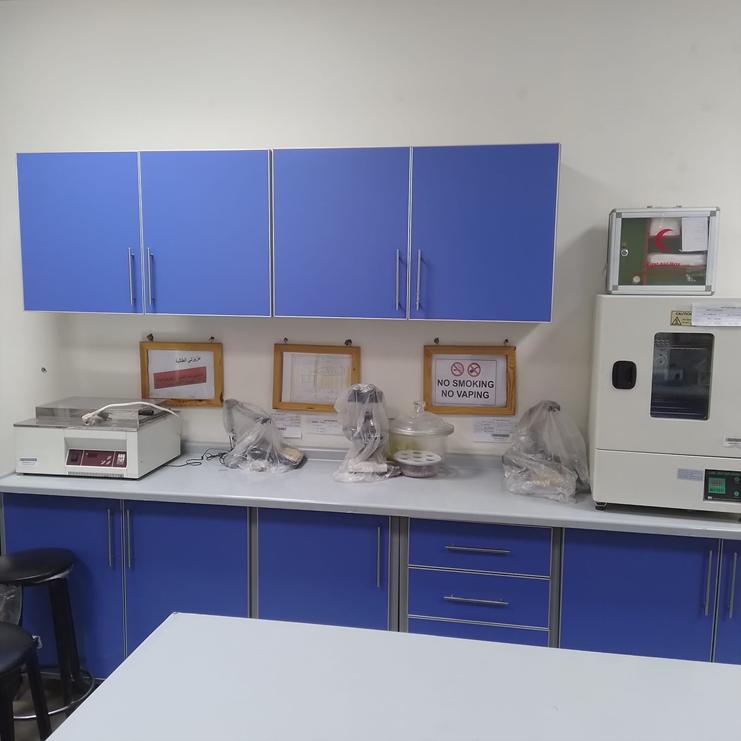
The General Biology Laboratories teach students how to use laboratory equipment such as microscopes, slides, and test tubes. Students also learn to write scientific reports and document experimental steps and results. The General & Food Microbiology Laboratories study living organisms and microorganisms in terms of their structure, functions, growth, and reproduction. They also focus on analyzing biological and food samples to detect microbes and ensure their safety. These laboratories emphasize the application of sterilization and biosafety protocols and understanding the impact of environmental factors on different organisms, which helps protect human health and the environment.
The General Biology Laboratories teach students how to use laboratory equipment such as microscopes, slides, and test tubes. Students also learn to write scientific reports and document experimental steps and results. They also focus on analyzing biological and food samples to detect microbes and ensure their safety. These laboratories focus on applying sterilization and biosafety rules and understanding the impact of environmental factors on different organisms, which helps to protect human health and the environment.
